
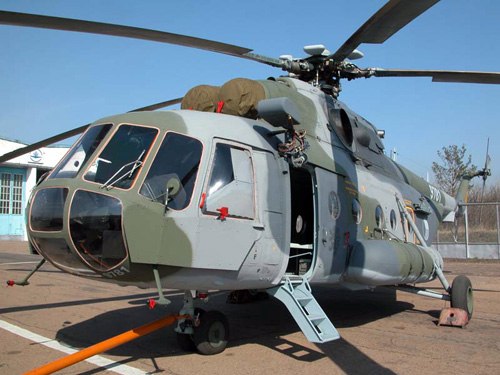
Mi-8/17/171 helicopter
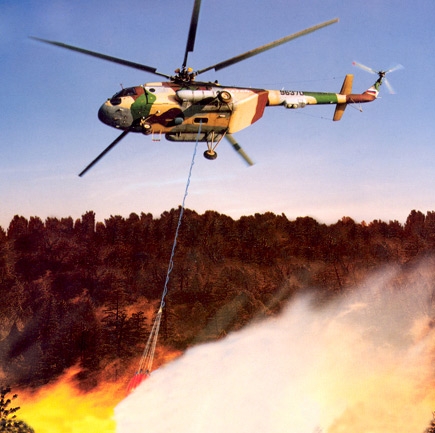
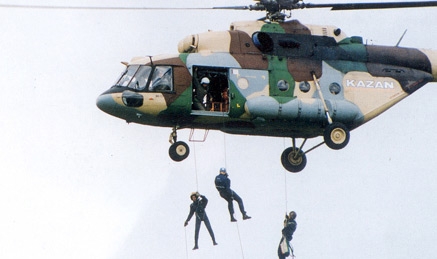
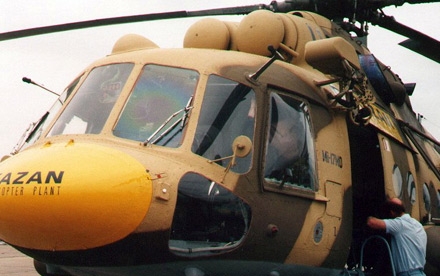
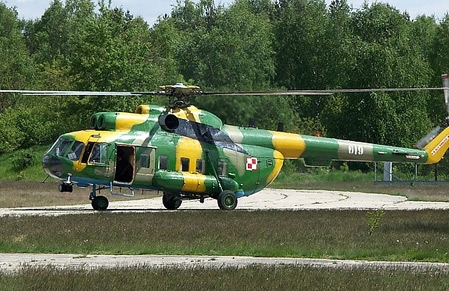
The Mi-17 helicopter is essentially a cargo helicopter offering a maximum internal payload of 4 metric tons. It was designed and developed by the M. L. Mil Moscow Helicopter Plant Design Bureau. Its design is similar to that of the proven Mi-8 helicopter, whose reliability is widely recognized.
The helicopter is powered by TV3-117 turboshaft engines, each delivering 1,900 shp during take-off. It is also equipped with a winch featuring a dynamometric safety system that allows a load of up to 3 metric tons on the hoist cable. The Mi-17 can also be used for passenger transport. In this configuration, the cabin is heated and air-conditioned and offers seating for 24 passengers.
An air ambulance version is also available, capable of accommodating 12 patient stretchers along with the necessary medical equipment. In addition, an electric hoist is mounted on the fuselage just above the forward door, allowing a person or a small load to be lifted aboard.
New production, manufactured in 2016
- Safír 5KG/MI auxiliary power unit for Mi-8/Mi-17 helicopters. 4 units in stock, ready for immediate shipment.
- Safír 5KG/MI auxiliary power unit for Mi-8/Mi-17 helicopters. 4 units in stock, available for dry lease.

Technical specifications of Mi-17 helicopter
We offer
- Logistics support
- Supply of new spare parts and assemblies
- Repairs of spare parts, assemblies, and instruments
- Supply of overhauled assemblies
- Mission simulators, test facilities, and diagnostics
- Airframes and engines, including components, repairs and overhauls, and technology supplies
- Pilot and ground personnel training
- Helicopter system modernization, conversions, armor upgrades, and auxiliary fuel tanks
- Data recording systems
- Communication equipment
- Navigation equipment
- FLIR observation systems